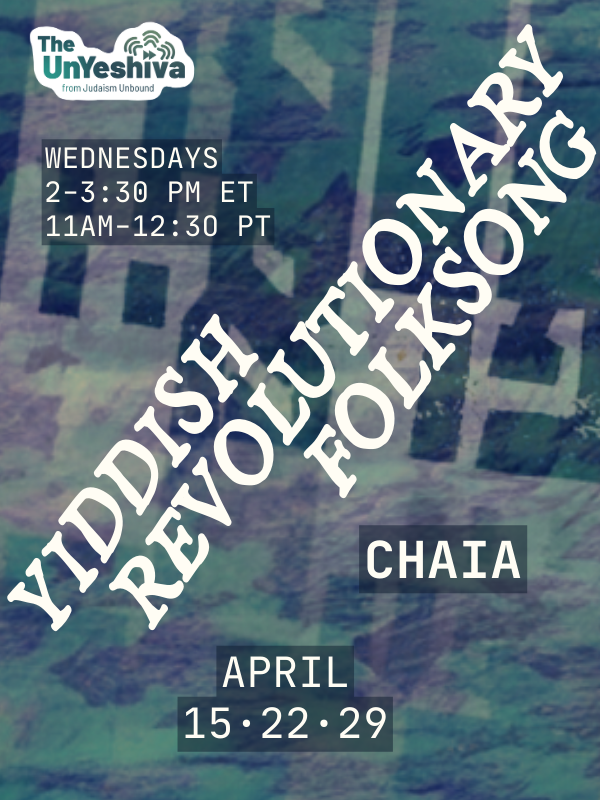
Yiddish Revolutionary Folksong

from $72.00

with Chaia

When
Wednesdays · 3 Weeks · Starts April 15th
2:00-3:30 pm ET / 11:00 am -12:30 pm PT

This class explores the tradition of Yiddish revolutionary folksong. Emerging from the revolutionary movements of early 20th century Eastern Europe, these songs carried the voices of workers and cultural activists who used them as tools of anti-fascist resistance, anti-Zionist organizing, and visions of Jewish communal identity.

The first session will introduce the historical and political context of Yiddish revolutionary song, focusing on the repertoire that circulated around the 1905 revolution and the movements that supported it. We’ll listen to archival recordings and trace how these songs traveled throughout Jewish communities in Eastern Europe. The second session will focus on the way folksingers sang these songs. We’ll sing the songs together, learning characteristic ornamentation of the style. In the final session, we’ll look at post-vernacular folksong practice—how artists and communities today engage with archival recordings and historical repertoire. Participants will begin experimenting with these recordings themselves through electronic sampling, considering ways to interpret and reactivate revolutionary Yiddish song today.

No prior knowledge or familiarity with the material required!

This class will be recorded and available to enrolled students to watch later.

Cost

This course is available at a sliding scale cost of $126 (the true cost), $99 or $72.

If you can afford the full price, we hope you will choose that option, which allows us to continue to offer lower rates and scholarships to those who otherwise would not be able to access this learning because of financial barriers.

If you need financial aid beyond the sliding scale, please fill out this simple form, and we will get right back to you.

Click here to donate to JUs financial aid fund to support financial equity and access to education for all students.

Sliding Scale Prices:

with Chaia

When
Wednesdays · 3 Weeks · Starts April 15th
2:00-3:30 pm ET / 11:00 am -12:30 pm PT

This class explores the tradition of Yiddish revolutionary folksong. Emerging from the revolutionary movements of early 20th century Eastern Europe, these songs carried the voices of workers and cultural activists who used them as tools of anti-fascist resistance, anti-Zionist organizing, and visions of Jewish communal identity.

The first session will introduce the historical and political context of Yiddish revolutionary song, focusing on the repertoire that circulated around the 1905 revolution and the movements that supported it. We’ll listen to archival recordings and trace how these songs traveled throughout Jewish communities in Eastern Europe. The second session will focus on the way folksingers sang these songs. We’ll sing the songs together, learning characteristic ornamentation of the style. In the final session, we’ll look at post-vernacular folksong practice—how artists and communities today engage with archival recordings and historical repertoire. Participants will begin experimenting with these recordings themselves through electronic sampling, considering ways to interpret and reactivate revolutionary Yiddish song today.

No prior knowledge or familiarity with the material required!

This class will be recorded and available to enrolled students to watch later.

Cost

This course is available at a sliding scale cost of $126 (the true cost), $99 or $72.

If you can afford the full price, we hope you will choose that option, which allows us to continue to offer lower rates and scholarships to those who otherwise would not be able to access this learning because of financial barriers.

If you need financial aid beyond the sliding scale, please fill out this simple form, and we will get right back to you.

Click here to donate to JUs financial aid fund to support financial equity and access to education for all students.


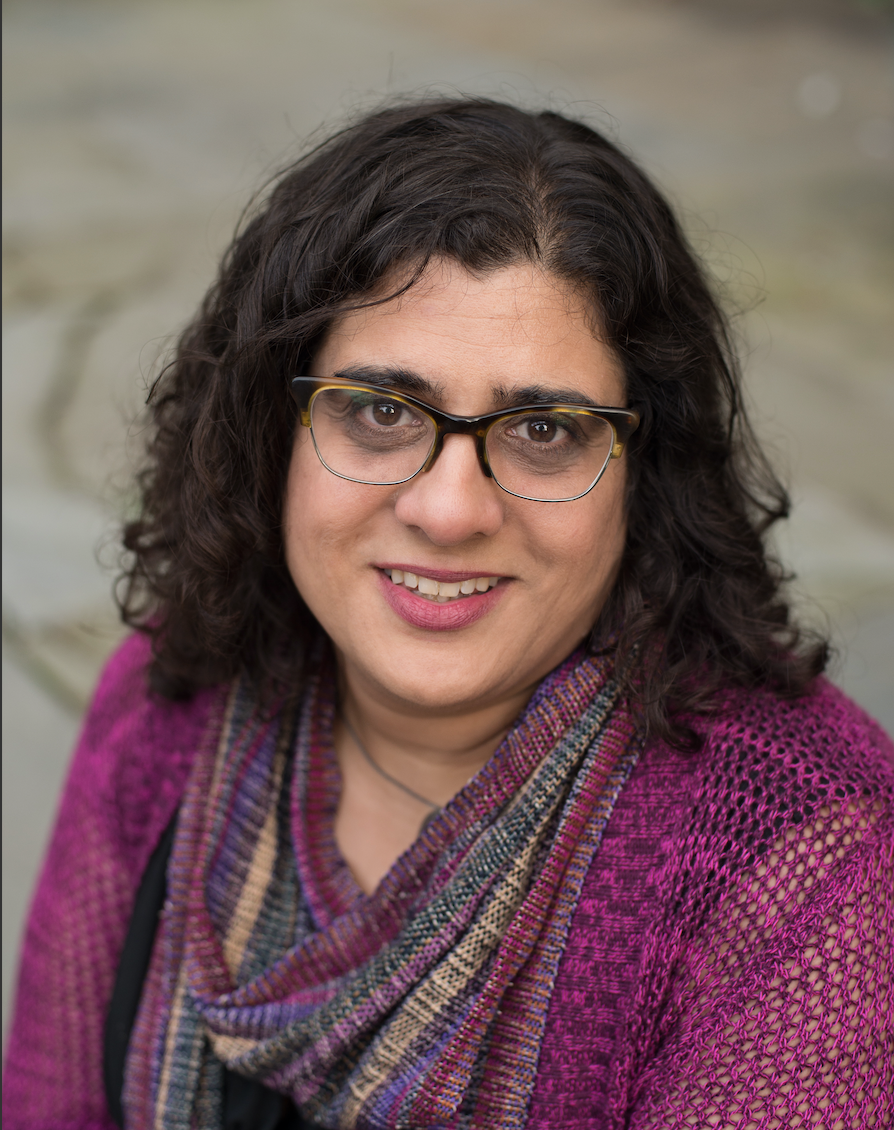
Chaia (she/her) is a composer working at the intersection of Yiddish culture and electronic music. Blending archival Yiddish recordings with techno and ambient soundscapes, she creates hybrid compositions that place ancestral voices within global and liberatory rave culture.

Raised in the klezmer tradition, Chaia was mentored by Yiddish music pioneers Hankus Netsky, Jeff Warschauer, and Basya Schechter. Her current practice involves sustained collaboration with Yiddish archives and collections, where she identifies, catalogs, and analyzes historical recordings that become the source material for her compositions.

Chaia’s work has been featured on NPR, The Lot Radio, and Dublab, as well as at The Museum of the City of New York, The Jewish Museum of Berlin, The POLIN Museum, and The Museum of Jewish Montreal. Her debut album, Yiddish Electronic, reimagines 7 Yiddish folksongs, pairing each one with historical samples and contextual commentary.